
Introduction
Many things have come and gone in Linn Park, but the most remarkable, yet most elusive, were the mills. The mills harnessed the river to drive their water wheels, and were the main source of employment in the area. If we stand today by the remains of their dams, we can almost hear the plash-plash of their water wheels. From the advent of rotary steam power in the 1790s, water power was in decline. Yet, in the search for renewable energy, water power is now experiencing a renaissance. In recent years, most of the former mill sites in the area have been seriously considered by consultants for small-scale power generation.
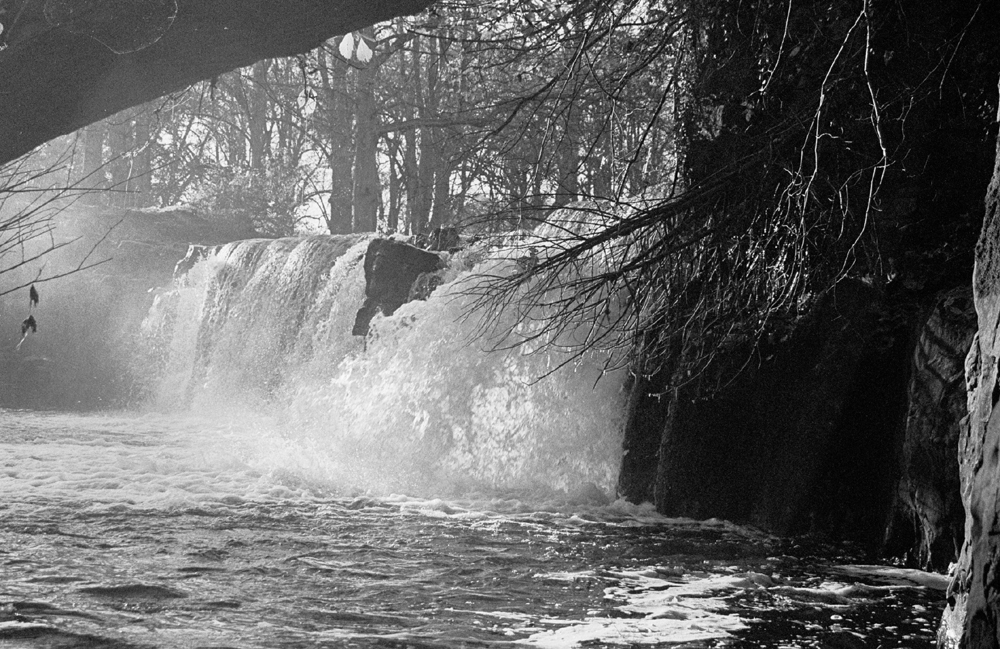 By some accounts, the stretch of the White Cart Water flowing through the park only supported one mill, a snuff mill. However mills did much more than grind snuff. Basically they were sources of power for almost any industrial process. Snuff milling was one of many mills in the park area, including paper, meal, flour, barley, pease, waulk, saw mills, bleachfields and printfields.
There were so many mills in Linn Park, that it is easiest to locate and understand them by their dams or falls. Each fall powered one or more individual mills, or several mill types. As each type of mill needed specific skills, the millers moved around between similar mills in the wider area, so we need to consider them too.
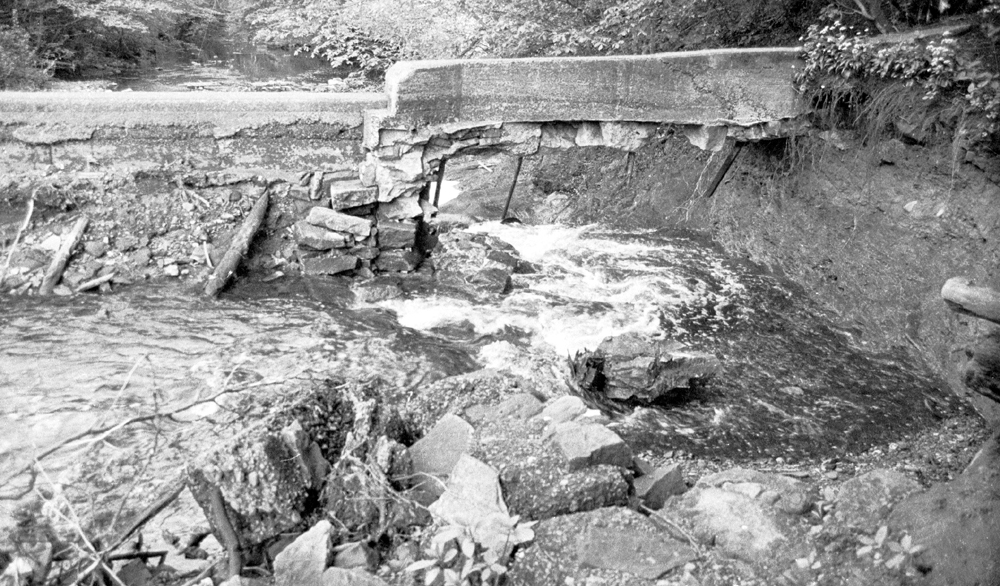 Starting just above Linn Park, the first waterfall was at Netherlee. The second was the natural fall at Linn. The third dam was at Millholm, now breached at the east end. The fourth was at Cartside, now gone. The fifth was at Cathcart Meal mill, many of its great sandstone blocks carried away by the force of the river. To understand the mills fully we need to carry on briefly downstream below the park to two other dams. The sixth dam was behind Weirs works, now lost. The seventh and final dam was at the end of Dundrennan Road for Millbrae Mill.
The river is always changing. A century ago, for most of the year, the river was a series of long tranquil stretches, separate by dramatic dams or waterfalls. This was still the situation through much of the park from Linn Falls down to Millholm until 1984, when Millholm dam burst. Since then, the river has gradually worn its way down through 300 years of deposits.
Further reading: What follows was mostly provided by Stuart Nisbet from his articles: ‘Netherlee and Linn Mills’ (The Eastwoodian Vol.1, 1989); ‘Renfrewshire Snuff Mills’ (RLHF Journal Vol.6 1994); The Four Paper Mills of Cathcart (Scottish Local History Vol.49, 2001).
Other material is accredited within its section.
Netherlee
The mills turned Netherlee into an industrial village which by the 1850s employed hundreds and competed with Cathcart in scale. Everybody relied on the flow and power of the White Cart for their livelihood. Netherlee mill lands are situated immediately over the boundary wall from the Lime Avenue at Netherlee. There were at least six types of water powered industry at Netherlee, including a waulk mill (1730s), snuff mill (1750s), bleachfield (1766), paper mill (1730 and again from 1790), printworks (1830s) and laundry (1900s). Netherlee was always closely associated with the mills distance downstream at Millholm and Cathcart, and for many years was known as the ‘Upper Mill of Cathcart’.
 The biggest milling story in the Linn Park area was the story of paper making. Netherlee was the second paper mill in Cathcart Parish. It was started up c.1700 by the owners of the first paper mill down at Newlands. In 1730 the family then vacated both Netherlee and Newlands mills, and set up their third paper mill at Millholm, which became the largest mill inside Linn Park. In the 20th century there was a fourth and smaller paper mill by the Snuff Mill Bridge, started up by the Netherlee mill owners. The first snuff mill in the area was at Netherlee in 1750. Snuff mills were small scale enterprises and could be set up and disappear quickly. Another appeared at Millholm in the 1790s.
There were also at least three bleachfields in the park area. Netherlee was the third, following Cartside (1760s) inside the park, Millbrae (1770s) and finally at Netherlee (1830s).
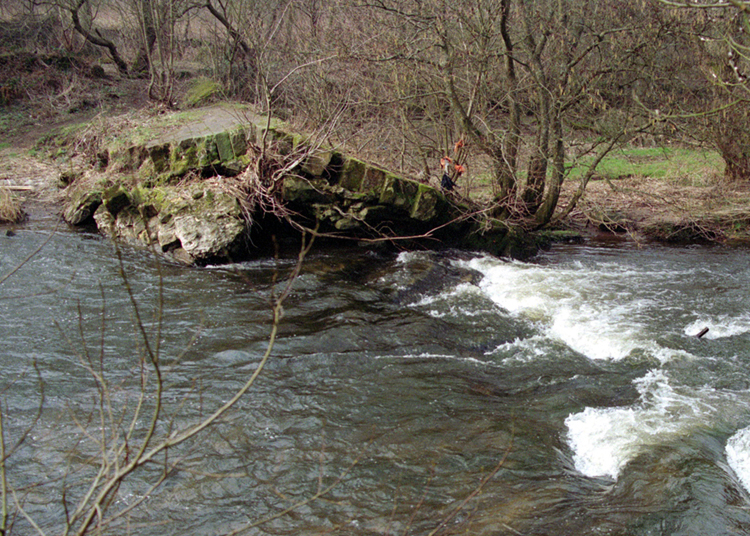 What can we see at Netherlee: The riverside path continues from Linn Park through the wall (the park boundary) and into Netherlee Mill Lands. The site was very large and buildings stretched all the way up the riverbank from the park boundary. Colour film from the late 1930s shows six-storey ruined brick mill buildings and numerous tall chimneys. Remains of the dam can be seen, especially on the Netherlee side of the river. Below the dam, on the Crematorium side of the river, the Ramloch Burn falls into the Cart on the park boundary. Small parts of the mill lade can be seen, which until the late 1960s went through a brick tunnel under most of the site. On the terrace above the site was Netherlee House, the mill owner’s mansion.
Linn Falls
Linn falls are the focal point of Linn Park and of its earlier country estate. The falls are also the best natural mill site in the area, and mills existed on both sides of Linn falls. Apart from grain mills, the most common type of early mill in the park area was the waulk or ‘fulling’ mill. Waulk mills used water power to wash and soften woollen cloth or leather and are almost as old and common as grain mills. One of the earliest milling families in the area were the Tassies. They were in Newlands by the 1620s and Netherlee in the 1670s. By the 1690s William and John Tassie were skinners and glovers further down the White Cart in Eastwood Parish at Pollokshaws, where they had a waulk mill for dressing their leather at the Shaw Dam. By 1700 the Tassies rented Waulkersland at Goldenlee and by 1730 the family had another waulk mill at Netherlee.
 The west or Goldenlee side of Linn falls (the opposite side of the river from Linn house) included three acres known as Waulkersland, which had a waulk mill by the 1600s. Initially worked by the Tassies, by the 1720s the waulk miller was John Ralph. Shortly after, Ralph worked at the waulk mill at Netherlee. Goldenlee waulkmill was still operating in the late eighteenth century. By the Victorian period it had been converted to a saw mill, run by Linn estate, to manage their woodland. The forester, David Allan, lived in the mill cottage nearby. Forestry was still making money in 1914 when the sawmill was modernised, and it continued in use until the mid twentieth century. In the Victorian period a circular summerhouse was built facing the falls. The industrial sawmill conflicted with the scenic view, and seems to have been constantly hidden behind a pile of timber, as the attached picture shows.
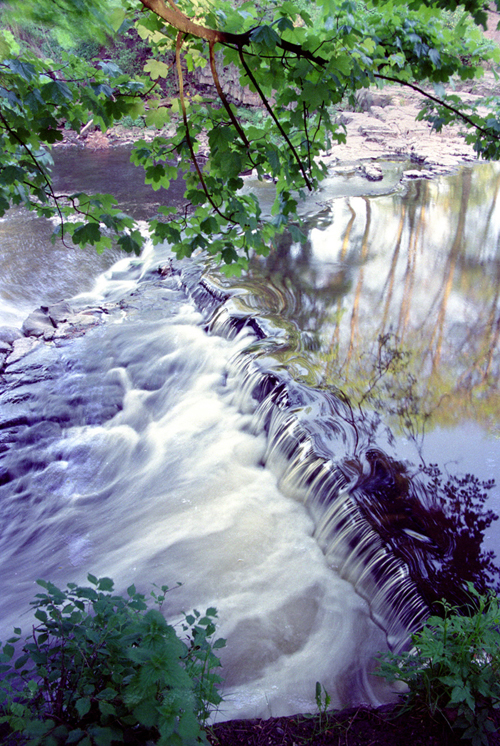 What can we see? Careful inspection of the site will show that this end of the falls is greatly altered to support this mill. The mill is actually built out onto the end of the natural dolerite sill, and the falls were originally wider. The rectangular foundation on the site behind the path is nothing to do with the mill and was built by a job creation scheme in the 1980s.
 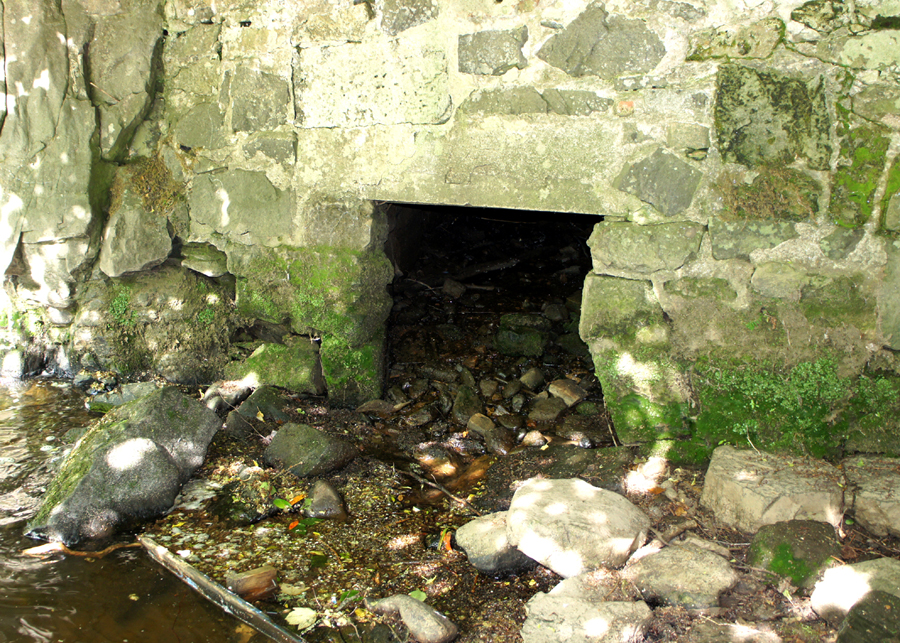 A small weir, made of a single course of sandstone masonry blocks, is fixed to the crest of the falls by metal bands to divert the water into the lade. The sluice opening in the bank can still be seen, plus remains of the metal control valve. Following the path down below the falls, the tailrace of the mill exits at the square opening in the face of the sill. Deep inside the tunnel, the iron waterwheel still lies buried in the wheel pit. (Pic SN46, 47 operning/ waterwheel) The site is crying out for archaeological investigation, both of the sawmill and the earlier waulkmill.
Linn side of Linn falls
 The
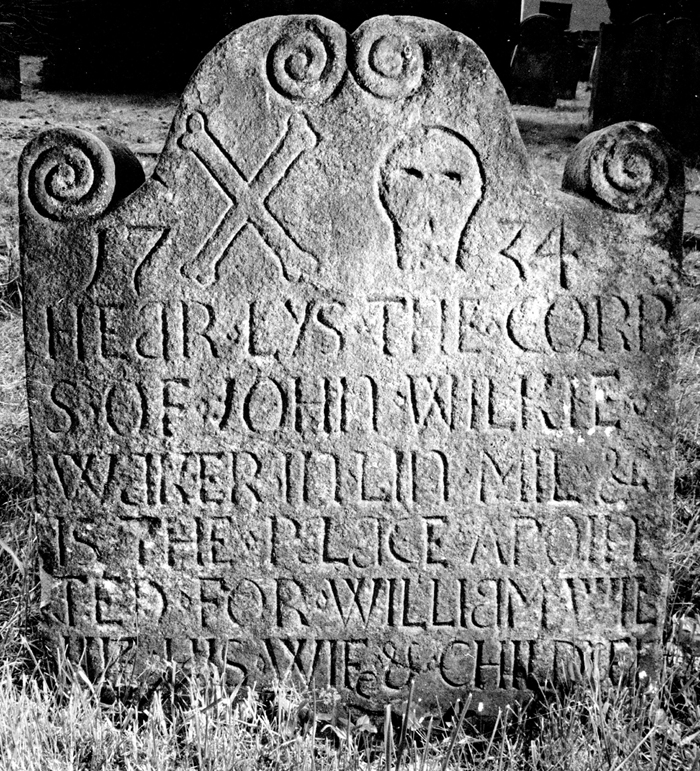
The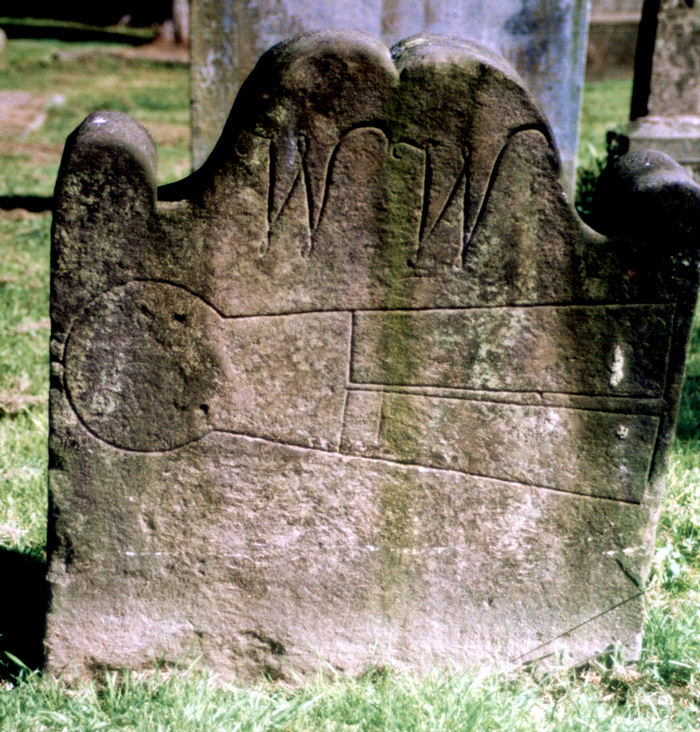 east or Linn side of Linn falls (the Linn House side) supported another waulk mill. From early in the 18th century the mill was worked by the Wilkie family. In the summer of 1766 an advert for Hagtonhill included the waulk mill and lands let to William Wilkie whose family are buried in old Cathcart cemetery. By that autumn, the lands and mill were owned by McDowall of Castle Semple. By 1791 the lease of Hagtonhill included nine acres of Linn of Cathcart with its houses, yards and waulk mill, plus Linn House. By this time waulk mills were in decline due to the rise of bleachfields, which did the same job.
The waterfall at Linn was such a good site that, once both sides came into the same ownership in 1792, the whole fall was advertised as a potential location for a water powered cotton mill. The falls were described as having ‘the command of the river White Cart’ providing a ‘capital fall of great power with very short lade'. James Monteith, an Anderston textile merchant, who had built a water powered cotton mill at Kelvin Bridge in 1784, took the lease of Linn falls from 1793. Despite ambitious plans, he never built Linn cotton mill. If a large cotton mill had been built here, it is unlikely that the estate or park would ever have formed. The falls would be an industrial area and the parkland would now be covered in housing. Such brief events have the potential to completely alter the area.
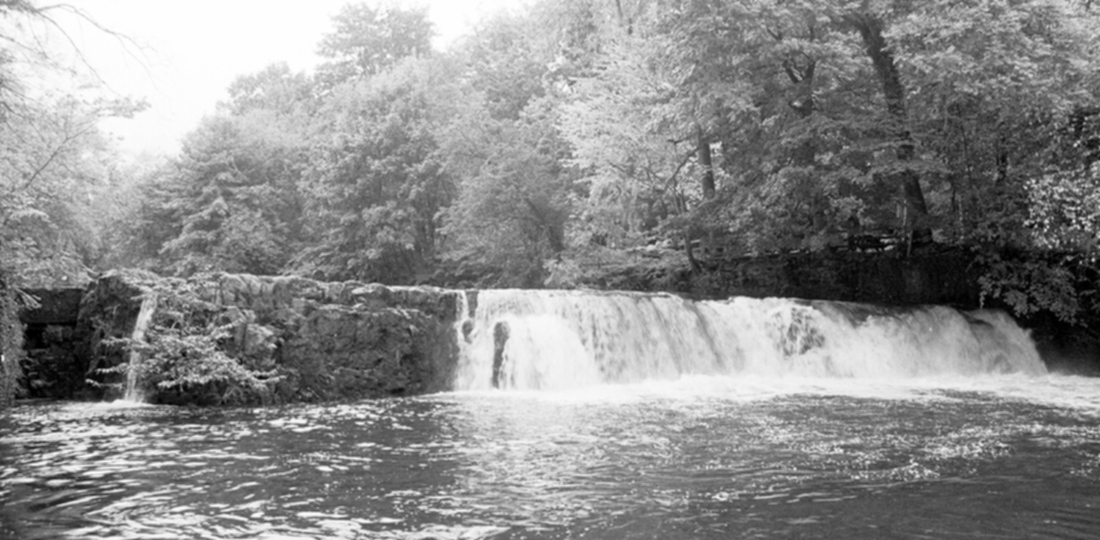 What can we see? The buildings of Linn Mill and its settlement were deliberately swept away when laying out Linn estate and building the driveway to Linn House. However, like Goldenlee waulk mill on the other side of the falls, Linn waulk mill was also built onto the end of the falls and can still be pictured. The site was very similar to the mill on the other bank, but has been completely stripped away. Only its wheel pit survives, cut down through the full height of the falls near the bank. The photograph of the falls shows the wheel pit on the extreme left. About forty years ago, when the river was low, almost all its flow ran through a sluice in the old wheel pit. Since then, the gap has been filled up with a rubble dam and a concrete cap.
Millholm Dam
The next dam downstream at Millholm powered a paper mill. Millholm was the third paper mill in the parish after Newlands and Netherlee. Initially it was known as the “Mid Paper Miln of Cathcart", as it was situated between the other two. Millholm had numerous owners over its two centuries of operation, the most notable of whom were the Halls and the Coupers.
The mill site was initially rented from Hamilton of Aikenhead by the Halls, whose family had been involved at the first two Cathcart paper mills. The Halls also had a printing business in Glasgow. By 1768 James Hall had actually purchased the mill lands from Hamilton of Aikenhead, plus the portion called Damhead on Hagtonhill estate on the opposite bank of the Cart, "whereon the east end of the dam is laid".
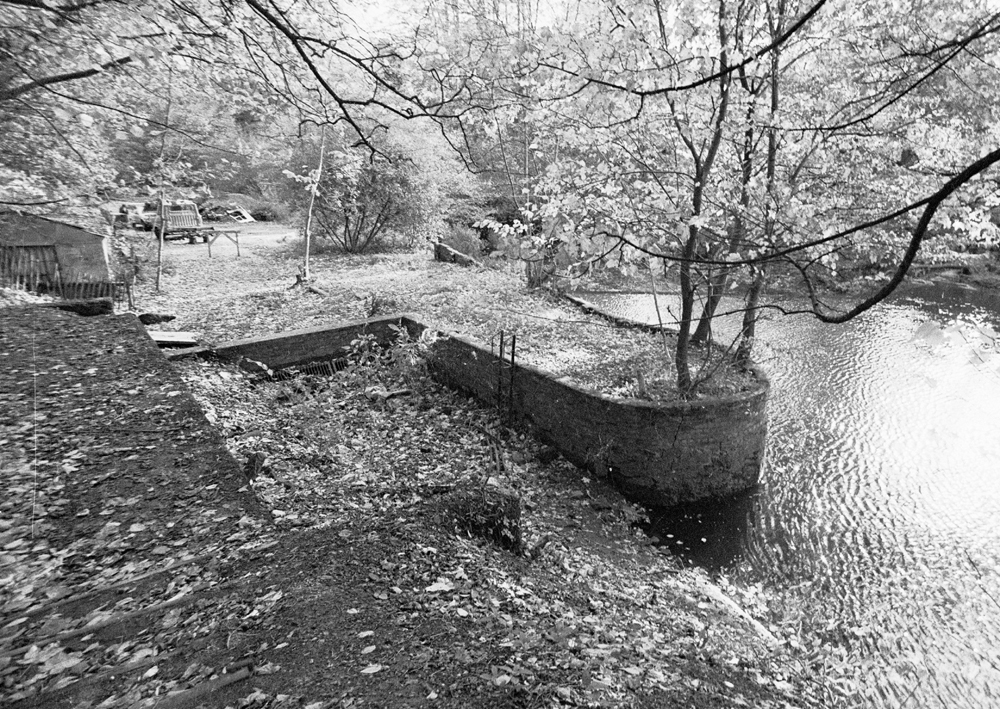 From the dam, the lade headed under the buildings, splitting into two from where it drove various machines. The earliest machine was the pulping engine, where water powered hammers mashed the rags into pulp. Millholm had other uses, becoming a snuff mill in the 1790's. We can understand snuff mills from adverts for the snuff mill upstream at Netherlee. The tobacco for making the snuff was dried at a special fireplace in a ‘close room’ using coals from the nearby pits. After fermenting for several months, the tobacco leaves were fed into a water powered cutting machine, with a revolving knife which chopped the tobacco into small pieces. The diced tobacco was then loaded into a water powered mortar and pestle machine which ground it into snuff. Netherlee snuff mill had four machines for grinding snuff, driven by two horizontal water wheels, powered by the dam on the river.
The snuff mill only lasted a few years, and Millholm returned to being a paper mill. By the 1840's the tenants were an old Cathcart family, Robert and James Couper, sons of the farmer at Braehead. Their father died early, and they were raised by their mother, who ran the local grocers. By this time the mill site was very congested and the owners house was also amongst the mill buildings. The Couper brothers built houses on Netherlee Road at Braehead, then decided to build villas above the mill. Robert had a villa, “Sunnyside”, designed by architect James Smith (now demolished). Shortly after, James commissioned Alexander Thomson to design “Holmwood” alongside, now restored by the National Trust for Scotland.
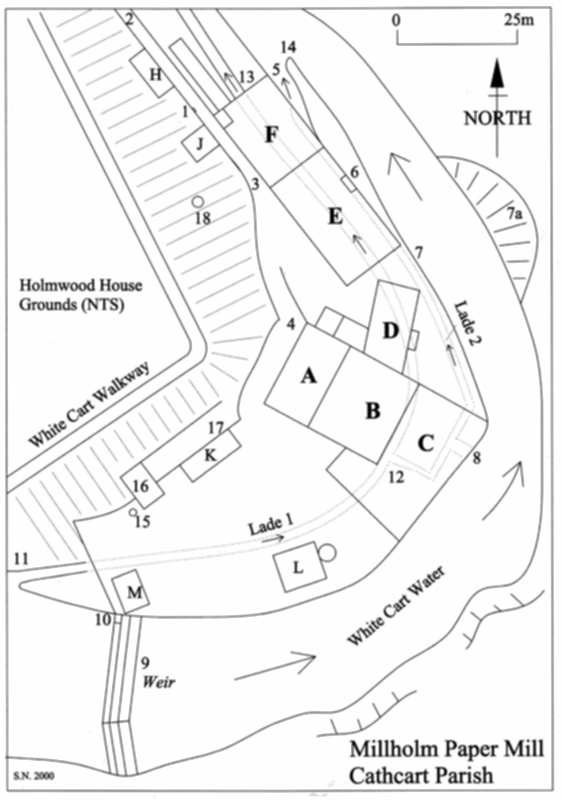 The river water was often too brown and silty to use for making white paper. Permission was granted by Gordon of Aikenhead (owner of Goldenlee) for ‘The right, privilege and liberty to convey the water from the old coal workings in my lands of Linn lying on the west bank of the River Cart for the use of the Paper Works at Millholm’. Victorian plans give great detail of the buildings and machinery, when it was still powered by two water wheels. A beam engine and several other smaller steam engines provide additional power on the sprawling site.
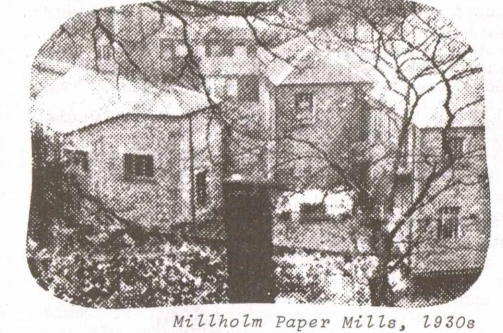
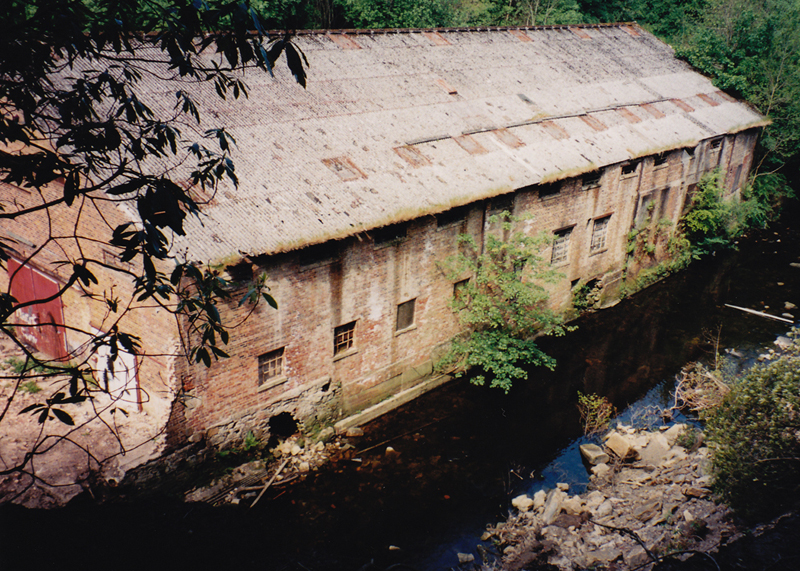 By the beginning of the twentieth century, Millholm had become part of paper-making giant Wiggins Teape, manufacturing typing paper from rags and wood pulp. The mill finally closed in 1929 and the chimney and most of the original buildings were demolished in the 1930s. Some brick buildings from the 20th century remained. The remaining buildings were let out for various uses, including a garage, but were damaged by the collapse of the cliff on the other side of the river in 1997 and demolished. The gatehouse and two mill houses on the road down to the mill were occupied into the 1970s but damaged by fire and demolished.
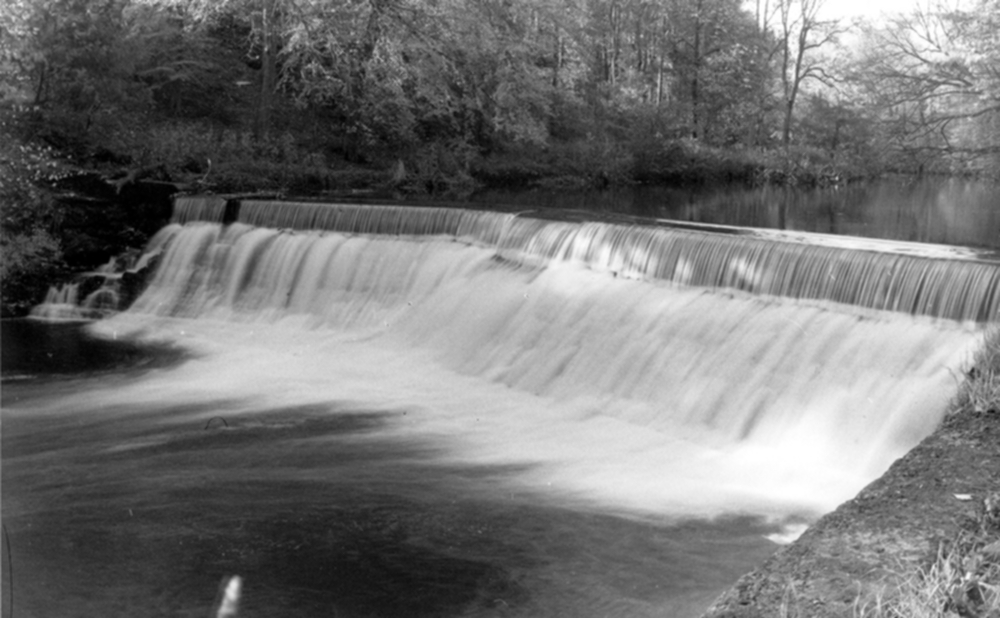
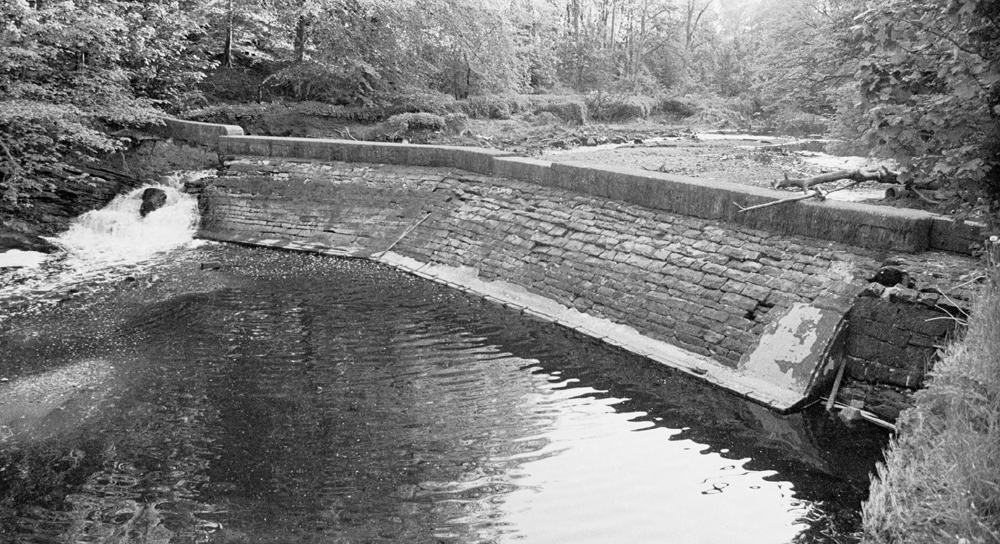
What can we see? The mill site is fenced off and not part of Linn Park. During the last war, an engineering firm used the waterfall and lade to generate electricity, however the weir was finally breached by winter floods in 1984. A great deal of remains survive along the river. On the mill road, the cobbles and flatter paving for the cart wheels, can still be seen.
The Millholm Well
Steve McCann writes:
I've often wondered about the history of the old well at Millholm Paper Mill. It was originally around 90 metres deep and extended in 1899 to a depth of 300 metres. As you can see from the video, it constantly overflows and emits a constant stream of methane bubbles due to the various coal seams below.
I transcribed the notes from the BGS borehole record:
"Premises now (1939) owned by Wiggins, Teape & Alex Pirie (Sales) Ltd. 48 Queen St, Glasgow, G1.
Mr Buchanan told the A.G.M. (Oct 1939) that the well was in use for not more than six to nine years. It did not yield enough water for the paper-making processes (e.g. rag-cleaning, pulping, etc). The yield quoted above is probably approximately correct, bit it is not clear if this supply was maintained.
The bore gave off gas continuously. This was bled off by a small pipe, which can still be seen. The gas could be ignited.
This is the main water supply pipe for the Millholm paper mill in Cathcart, Glasgow. This water comes from old coal mines, the bubbles that you can see are methane gas, and are highly flammable as you can see.
At present, in the open, near the river bank, an iron pipe 22 inches in diameter projects above ground for a couple of feet or so. Water, with gas bubbling up strongly through it, overflows continuously."
A Painting of Millholm
In the latter part of 2018, Carole Quarrell was in touch with Gerald Blaikie of Scot Cities, who kindly forwarded me not only his comments, but also Carole's picture of her Water Color painting of Millholm Mill.
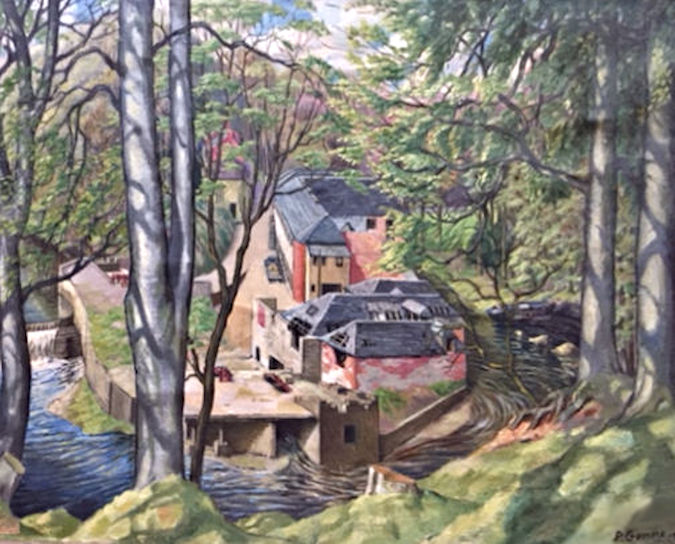 Gerald writes:
What a great find your oil painting is! The picture shows the paper mill at Millholm, Cathcart, which I could identify because it was situated at a 'horseshoe' bend in the river, just like the one in the Eastenders opening credits. I've never seen any images of Millholm as a working mill - the artist's vantage point on the opposite bank is now inaccessible to the public. The position of the weir and the water outlet matches the layout shown on old maps. I've added a straightened up version of the painting and an 1856 map to my White Cart Walkway web page which features Millholm and surrounding parts of Linn Park. I have credited you [Carole] with the image.
Sadly, the Scot Cities web site is no longer, but it was archived on the 26th October 2020 by the Web Archive.
More on Millholm - Chapter 8 of Why Cathcart - Jean Marshal 1969
About 1660 paper was first manufactured in Scotland and towards the end of 1685 a French refugee driven from his country by religious intolerance arrived at Greenock with his daughter Elise, then about six or seven years old. Friends there encouraged him to further his business of paper-making in the West of Scotland and so he made his way to Glasgow.
Nicholas Deschamp collected rags and in time set up the paper mill by the side of the River Cart, known afterwards as Paper Mill Farm (at the end of Earlspark Avenue, beside Langside Station). He called on the "guidwives" of farmers and cottars, and astonished them by saying in his broken English that, however soiled and worthless the rags were, he would "buy dem all and make dem ver good for lily vite paper". Business continued to prosper and in 1729 or soon after, he moved to larger premises at Millholm on the south side of the river not far from Cathcart Castle.
Each of the paper mills, it will be noticed, was situated beside a weir since a plentiful supply of pure water was necessary for good writing paper or cardboard. Millholm was certainly an ideal spot. The buildings were almost hidden from view by the trees with only the chimney stack visible (demolished March 18th, 1938). The spoil was used for the Empire Exhibition at Bellahouston.
Elise Deschamp married the meal miller's son James Hall who was apprenticed to her father and who afterwards inherited the business. He died in 1759 and, so far as we know, the paper mill continued in the family until the beginning of the 19th Century. Generations of Halls are buried in the old churchyard and confusion reigns between the Halls who were millers and those who were paper-makers. It is suggested that the old Frenchman changed his name to Hall but there is nothing to prove or disprove this. No doubt he lies in the parish churchyard.
 According to church records, only by publicly appearing before the congregation and renouncing both the pope and the Devil was he accepted as a member of the Church of Scotland. During his sojourn in Cathcart he had been a regular church-goer and enjoyed a certain measure of respect as a businessman, yet, with true Scots canniness, the people were also suspicious of him. In 1696 he subscribed £100 to the Darien Scheme and supplied the paper used by the Darien Company. At that time he made no effort to change his name. Elise Deschamp, after her marriage, was known by the diminutive· "Peggy" .
Millholm, it is believed, was in the hands of Hall's trustees until sold to Messrs R & J Couper in 1853 who had been tenants since 1841. During these years paper had been made by hand but in 1853 the Couper Brothers introduced machinery. Known as Mill No.18, the Couper Mills manufactured paper for writing purposes used by banks and lawyers. Large orders were also placed by the Government.
Robert Couper was joined in the ventures by his brother James, a local carpenter. They were men of principle and held in high esteem. About £8,000 was left by Mr Robert Couper to build a hall, reading room and library for Cathcart. He also left a sum of money called the "Couper Bequest" for the benefit of local people in dire need, the only condition being that they reside within a mile of Cathcart. Miss Marion Couper, the last of the family, died in 1933 aged 84. It was she who launched a scheme.to start the Victoria Infirmary as she was disturbed at the lack of hospital facilities on the south side of the Clyde. The "Victoria" was eventually opened in 1890 by His Grace the Duke of Argyll and dedicated by the Rt Rev James Smith, D.D., of Cathcart Parish Church. Yes, Cathcart has had good reason to be grateful to the Couper family.
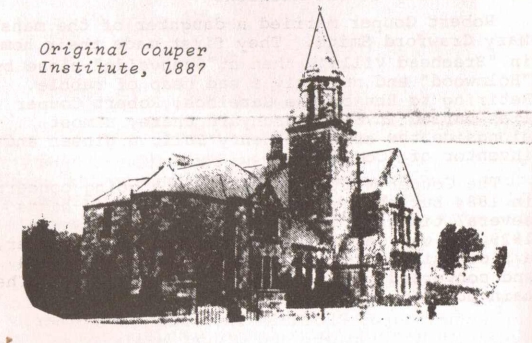 At the time of the annexation to Glasgow in 1912, the Corporation decided to make alterations to the Couper Institute to meet the reqUirements of an increasing population, but owing to World War I this was not completed until 1923. The Lord Provost, Sir Thomas Paxton, Bt., L.L.D., opened the halls on April 18th. The Chairman and Convener of the Halls Committee, Councillor George D. Morton, announced that the original estimate for the work had been approximately £20,000 but now, after the war, it was in the region of £40,000 - so even then costs were escalating to a surprising-degree.
The original Couper Institute remains with the name and date 1887 inscribed in front. The architect was James Sellars, who also designed the Victoria Infirmary. The Library, a most excellent one, was built on the one side and the large hall on the other.
James Couper lived in "Holmwood", close to the mill. This house is a splendid example of "Greek"Thomson architecture and was built in 1859. Several well-known business gentlemen have been the owners, one of them being Bailie James Gray, J.P., who Closely resembled the late Lloyd George. When the Liberal leader visited him in the 1920s, Cathcart was en fete for the occasion.
Since 1959, "Holmwood" has been the convent of "Our Lady of the Missions".
Robert Couper married a daughter of the manse, Mary Crawford Smith. They first made their home in "Braehead Villa", then at"Sunnyside" close by "Holmwood" and now only a sad heap of rubble. Retiring to Rhu on the Gareloch, Robert Couper lies buried in the churchyard there, almost alongside the grave of Henry Bell, engineer and inventor of "Comet" fame.
The Couper Mills were sold as a going concern in 1884 but throughout the years changed hands several times. The older mill closed down in 1929 and was demolished in 1938 while the other, a flock mill, was bought by Macfarlanes in 1947 and converted to a civil engineering plant. The main building was gutted by fire in 1953.
Cartside
When James Hill built Cartside House in the 1760s, he rented out two acres on the riverbank below as a bleachfield. An advert for the house in 1765 included the bleachfield, boiling house, bleaching equipment and the ‘privilege of the water of Cart’. Hill, also owned a shop in Trongate, possibly for selling the bleached wares. Bleachfields were common in the parish, with others at Netherlee and Millbrae, both from the 1760s.
What can we see? As the bleachfield was in direct view of Cartside House, all traces have been deliberately erased. Pure water was obtained from a spring on the hillside which still discharges water and occasionally undermines the park path.
Cathcart Mill (The Snuff Mill)
Continuing downstream, the next dam in the park was below Cathcart Castle. The site itself has a much longer pedigree than any of the other mills. It was traditionally one of the three ancient meal mills of Cathcart parish, along with Millbrae and Dripps (up at Waterfoot). In 1589 the miller was James Struthers, and by the 1680's John Hall, who died about 1700 and is buried in Cathcart Kirkyard. His elder son John continued the meal mill and it was his younger son James who branched into paper making at Newlands and Netherlee.
Cathcart meal mill passed to John Hall's grandson in 1762, who would be the last meal miller in Cathcart. The mills were having to adapt to cater for a wider variety of agricultural produce. In 1770 John built a flour mill adjacent to the meal mill, and advertised that "Gentlemen may have the opportunity of having their wheat made into flour". Shortly after a Barley Mill was also in operation at Hall's expanding "Three Milns of Cathcart". However his enterprise was not matched by a growth in custom and Hall sub-let the mills. By 1785 he was bankrupt. The mills struggled on and in 1795 were advertised including pease, oat and barley mills, two water wheels, granaries and a reservoir, plus the 15 acres of mill lands. The tenant miller was William Mitchell whose daughter married Archibald Muir, son of Netherlee papermaker John Muir. Archibald commenced Cathcart's fourth paper mill in one of Hall’s old grain mills. This was a much smaller scale enterprise than Millholm or Netherlee paper mills. In 1835 Muir's lease was terminated and Solomon Lindsay took over. Like the other Cathcart paper mills, the site had several uses, also manufacturing snuff on a small scale.
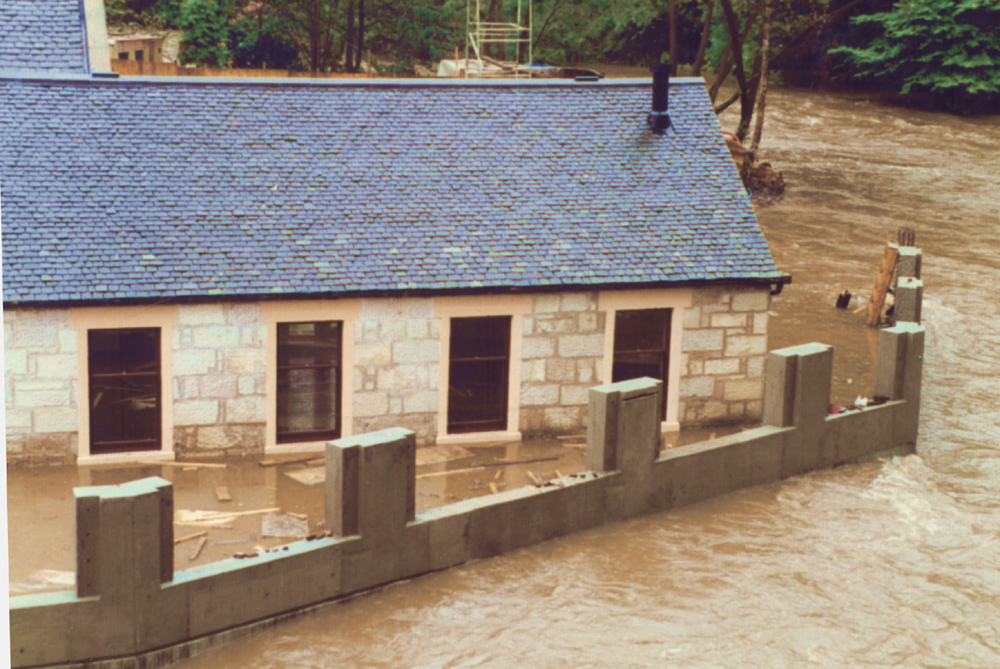 The site lay derelict for many years, was saved from demolition by local enthusiasts, and periodically flooded. In the 1990s it was converted into flats, named “Snuff Mill Court”. It is ironic that despite the long tradition of numerous mills, particularly paper-making, it is by the lesser product of snuff that the park area and adjacent bridge is remembered today.
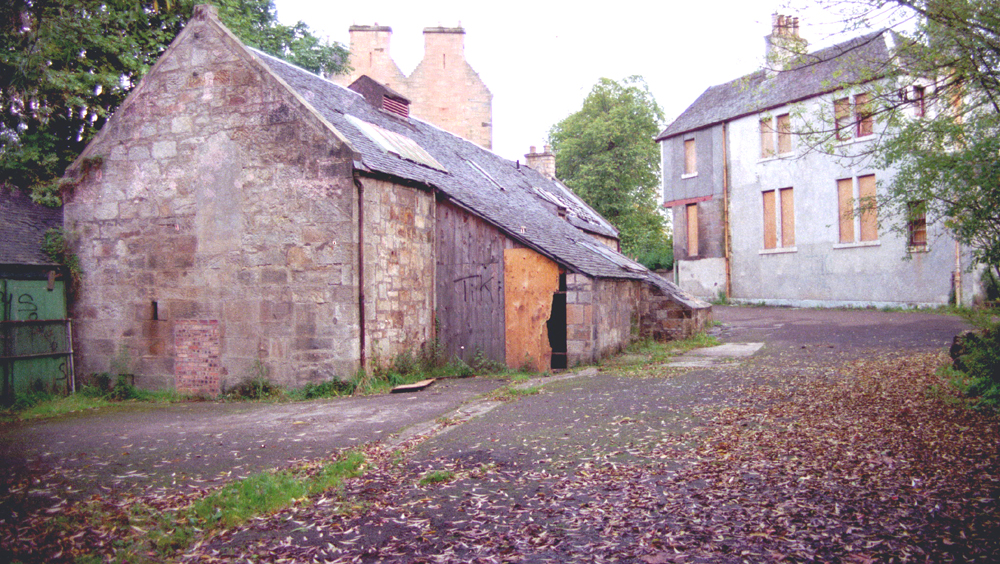 What can we see? The mill site is now private housing. The west end of the dam survives, built of large sandstone blocks, though it is often hidden by trees washed down the river. Despite their size and weight, the blocks have been gradually swept away down the river during floods. In the 1980s, Strathclyde Regional Council proposed building a great dam in the park which would fill during heavy rainfall and reduce flooding downstream. The proposal was abandoned in favour of the three dams recently built further upstream at Carmunnock, Eaglesham and Hazelden. All the old mill dams in the area are now under consideration to generate renewable energy.
The Mills - Chapter 7 of Why Cathcart - Jean Marshall 1969
Solomon Lindsay, born in 1722, came to Cathcart from Penicuik in 1812 and began the manufacture of paper in what had been a meal mill at the side of the Old Bridge. Two years later he introduced a new feature, the manufacture of snuff which occupied only a small part of the building.
Glasgow was past the throes of the tobacco trade with America when manufacturers sent their leaf to Lindsay's to be ground into snuff. Cardboard used in bookbinding, however, was chiefly produced here at the mill.
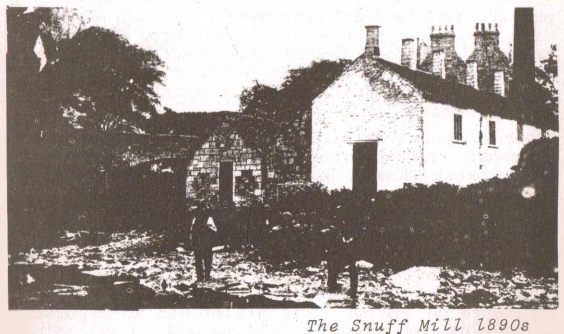 After his death in 1859, his son David Lindsay carried on the business until 1902 when he died in the same room in which he had been born 85 years previously [see Note 1]. His cottage was where Mill House now stands at the entrance to the Linn Park. At one time he thought of marriage and was given permission by the Earl of Cathcart to build a house for his bride-to-be. Lindsay House was erected in 1863.
His lordship, however, was extremely annoyed at the large house in old baronial style instead of the cottage he had expected. David Lindsay never did wed, and soon flitted back to his "ain wee hoose". Above the door of the former main entrance to Lindsay House can be seen a perfect monogram, all the letters of the name "Lindsay" being entwined. It later became one of the
tenements the old gentleman also very possibly deplored. (It may never have occurred to him that he too altered the landscape in building this house, in design so different from the rest).
With the owner's death, the mill closed and the stock was sold, bringing to an end Cathcart Paper Mill, known in the trade as "No 19". Three years later the Earl sold the cottage and mills to the later Mr McIntosh who took down the cottage and built on its site the villa "Mill House". Since the recent death of Miss McIntosh, the last member of this family, the name of the house has been removed.
The ancient mill is in use temporarily as private lock-ups at the moment. Though at one time three water-wheels existed, none is now to be seen. The part of the old snuff mill which stands at the river's edge bears the date 1858 but that part adjoining the road is the really ancient section.
When stocks were cleared, souvenir containers of snuff were distributed among local residents. There is at least one left after all these years.
CATHCART MILL
As is well known, every district long ago had its meal mill to which the farmers sent their A grain to be ground. The miller was an important member of the community and usually a man of substance. Two stones lying side by side in the old churchyard mark the graves of generations of Halls who were the millers of Cathcart. For record purposes only, on one stone is the following:
"Here lyes the dust of John Hall of Cathcart
Mill, and of Ellison Craig, his wife, AD 1689;
likewise of John Hall in Cathcart Mill aged 80
who died AD 1743; and of Helen Gilmour, his
wife 1773".
On the other stone:
"Here lies
interred the body of James Hall of Cathcart Mill
who departed this life December 14, 1782, in the
57th year of his age and is the burial place
appointed for his wife and their children".
However, no further names have been added (See next chapter) .
LANGSIDE MEAL MILL
The mill was erected before the end of the 16th Century at the foot of Millbrae, at the west corner of the road at what is now Tantallon Road. A small cottage still stands a short distance from the foot of the brae looking down on Millbrae Bridge. This was the miller's house and the mill occupied the ground in front of it.
Millbrae derived its name from this, in all probability. The inlet of the lade was upriver at the bend near Carmichael Place, and the outlet a short distance below the b.ridge. There used also to be a high wooden fence from the Bluebell Wood to Millbrae Road" so close to the river that it only left a narrow lane instead of today's broad Tantallon Road. The millers here were the Uries and afterwards the Craigs. The mill was destroyed by fire in 1852, now only the cottage remains. Perhaps some day there will be some interesting excavations here?
[?? Modern Map reqd]
Further downstream
Newlands Paper Mill
Paper milling began in the 1680’s, at what later became Paper Mill Farm, Newlands. It was driven by a sixth dam, with a long lade which crossed what is now Weirs Cathcart works. It was started by Frenchman Nicholas Deschan. It was his son in law, James Hall, son of the Cathcart meal miller, who was attracted upstream to start a second paper mill at Netherlee by the Maxwells of Williamwood.
Millbrae
Millbrae (or Langside) mill was situated at the bottom of Millbrae, at the corner of Tantallon Road. Like Cathcart meal mill, Millbrae branched out into milling other types of grain. In the 1770s it was milling corn, barley, wheat and pease. The dam was at the bend in the river at the end of Dundrennan Road and the long lade wound across Battlefield and back to the mill. The mill was damaged by fire in the 1850s.
Millbrae also had a bleachfield and printfield situated on the flat ground alongside the mill lade. Its speciality initially was in printing blue and red handkerchiefs, and by the 1770’s was printing linen and cotton garments. When it changed hands in 1773 the proprietors had the right to ‘take from the miln lade water to fill their dye vats and wash their yarn’. The works ceased in 1792 when the owners Gray and Urie went out of business.
Previous Article: 20th Century Developments
Next Article: Landscape and Mineral Resources