
A ✓ indicates that the species has also been indentified by sound using Merlin.
Introduction
The following is taken from the sections titled "Broadleaved Woodland", "Coniferous Woodland","Winter Visitors", and "Summer Visitors" [last four pages] in an undated leaflet entitled "Birds of Linn Park" which we think was published in the mid 1990's.
Broadleaved Woodland
The mixed woods of Oak, Ash, Elm and many other tree species are home to some of our most familiar birds. Great Tits (with their black breast band). Blue Tits (with their blue cap) and the tiny brown Wren can be seen and heard all over the park. Blackbirds, Song Thrushes and the larger, greyer Mistle Thrush are also frequently sighted, often when feeding on the ground, turning over leaves to look for worms and insects.
With its pink breast, grey head and white lines on its wings the male Chaffinch is both conspicuous and approachable; the female, though lacking the bright colours, is equally bold. Boldest of all however is the Robin, whose sharp 'tic-tic' alarm call is a warning to intruders.
If you are lucky, especially in winter when there are few leaves on the trees, you may see Treecreepers and Woodpeckers. The Treecreeper's brown colour suid quiet nature make it difficult to detect but it s long curved bil l and method of spiralling up tree trunks make it quite distinctive.
Great Spotted Woodpeckers are black and white and feed high up in the canopy. You may hear one drumming rapidly on a dead tree to attract a mate or see large holes in trees made by the Woodpecker as nest sites.
Coniferous Woodland
Conifer plantations of Scots Pine, Spruce or Larch are generally quite dark places where few plants will grow. Consequently there are relatively fewer insects and other food for birds, but plantations are home to a small number of birds that specialize in feeding in such woods.
The Goldcrest is Britain's smallest bird and seldom keeps still long enough to give good views. It likes to feed in the high foliage of conifers where it finds spiders, insects and larvae. It gets its name from the black-bordered orange crest on its head. The body is a greenish colour, but paler below.
With its black cap, white cheeks and white patch at the back of its head, the Coal Tit can be separated from other members of its family. Again, it feeds high up in the canopy but its song - like the Great Tit's teacher-teacher-teacher though higher pitched - is quite distinctive.
The dense canopies of plantations can also be good for owls and birds of prey. The Tawny Owl is nocturnal and more often heard than seen. By day it sits close to the trunk of a tree, but by night flies silently through the woods catching Woodmice and Bank Voles. The familiar hooting call is made by the male only; the female makes a sharp keewick in response.
The Sparrowhawk feeds on small birds which it takes by surprise, chasing them through the woods on its short rounded wings and gripping them tightly in its shaip claws. It has a barred breast and flies with a pattern of a few wing-beats then a short glide.
Winter Visitors
The abundance of seeds and fruits produced in autumn by trees, bushes and flowers enables many small birds to survive the winter. Insect-eaters either adapt or migrate to maintain their food supply. Some birds migrate to this country to take advantage of the variety of foods available.
Scandinavian birds like the Fieldfare and Redwing migrate in huge numbers. The Fieldfare is a large thrush with a grey head and rump. The Redwing is a smaller thrush with red sides and underwings and a white stripe through the eye. Both eat berries, worms, snails and insects and are often seen in small flocks.
One of the highlights of the winter is the occasional appearance of the Waxwing. a delightful bird the size of a Starling but with a pinkish colouring and a small crest on its head. It feeds mostly on berries but also on any insects it may find.
Pine cones provide the food source of the Crossbill - an irregular visitor to the park - whose powerful bill enables it to extract the seeds. The Siskin is a yellowgreen finch which also eats tree seeds, most often those of Birch and Alder, and often feeds in a noisy flock.
A regular winter visitor to the river is the Goosander, a large fish-eating duck which breeds further upstream. The male is mostly white and the female and juveniles brown with an untidy reddish-brown head and neck.
Summer Visitors
Warblers are slim insect-eating birds which arrive in spring to feed on the many insects living in our grass, shrubs and woods.
The Willow Warbler is a greenish-coloured bird with a prominent white line above its eye. It is often seen picking insects from leaves on bushes or small trees. Its close relative the Chiffchaff usually feeds higher up in trees. Only its song, a repeated 2-note chiff-chaff makes it easy to separate trom the Willow Warbler.
The Blackcap is easier to identify. The male is greyish, with a glossy black cap. The female however has a reddish-brown cap. It has a beautiful loud song which it sings from high up in bushes or trees.
Other summer visitors to Linn Park include Swifts. Swallows and House Martins which can often be seen over the river or soaring over the park on warm summer days hawking insects, twisting and turning with incredible speed.
The elusive Spotted Flycatcher is another insect-eater. It is a brown bird with a speckled breast and a peculiar habit of catching a fly and returning to the same perch every time.
Birds that are not on the list on page two include the Nuthatch and Raven, as well as the Buzzard.
Birds for which we do not yet have photographs include Blackcap, Blue Tit, Crossbill, Fieldfare, Gold Finch, Great Tit, Green Finch, House Martin, House Sparrow, Little Grebe, Magpie, Spotted Flycatcher, Starling, Stock Dove, Swallow, Swift, Tawny Owl, Waxwing, and Willow Warbler.
Where one of the Gents has recorded a species using Merlin, a link to eBird has been added. [This is work in progress !]
Blackbird ✓ Resident
Thanks to Aileen Milne, 1st march 2018 - Male Blackbird.


And on 2nd December 2020 - Female Blackbird


Click to find out more about Eurasian Blackbirds on eBird - recorded on June 20th 2025.
Bullfinch ✓
Photographs by Chris Everett,
Click to find out more about Eurasian Bullfinch on eBird - recorded on June 23rd 2025.


Aileen Milne 11th December 2018.
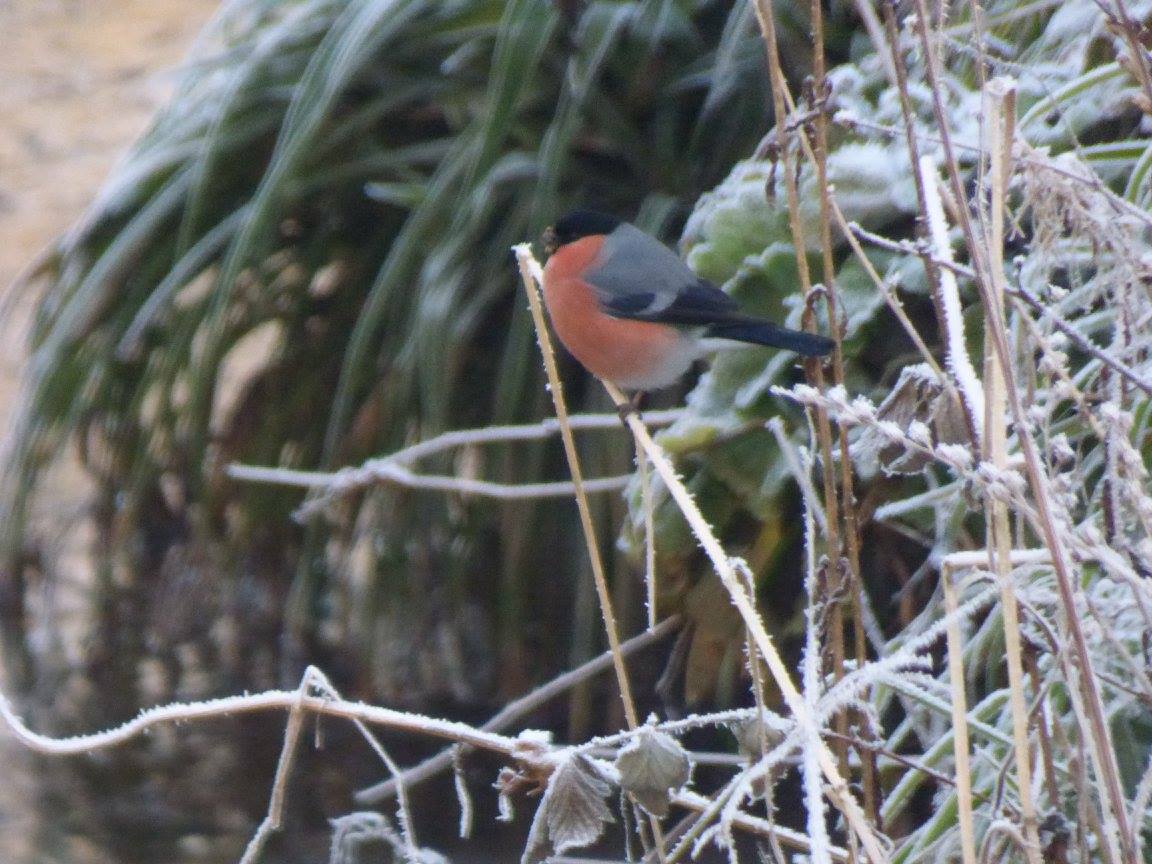 Thanks to Aileen Milne - a Male - 8th December 2020


Buzzard ✓
Photograph by David McCann near the Golf Course, February 28th 2016 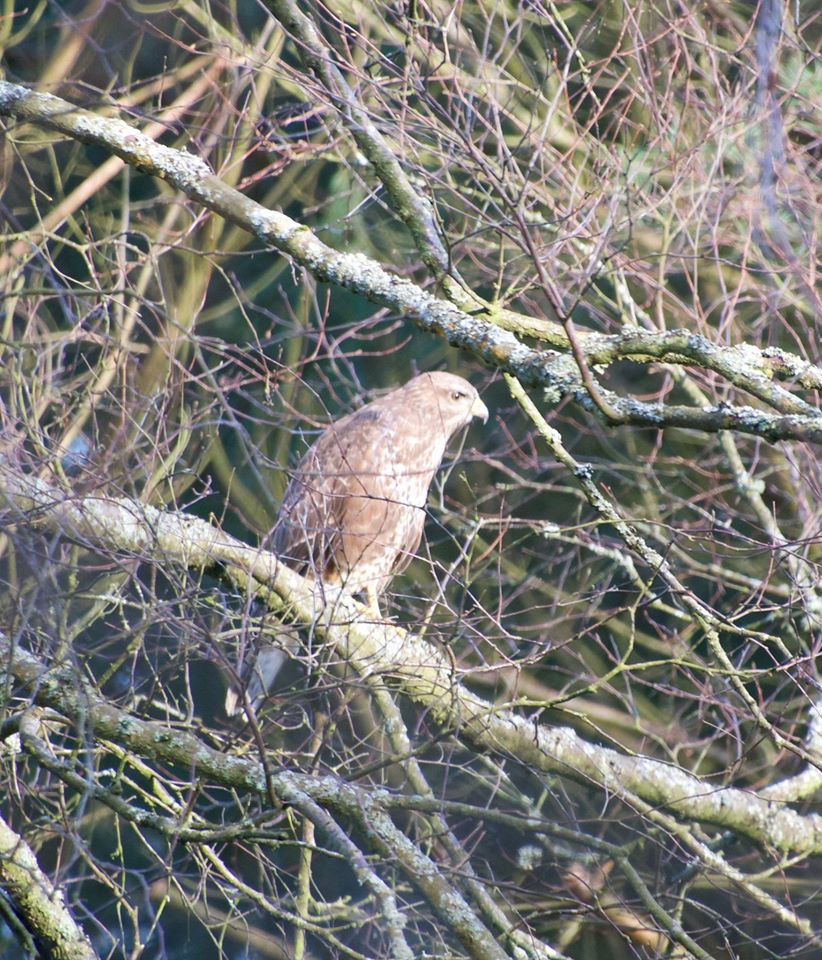 Photographs by Chris Everett 2017


Click to find out more about Common Buzzard on eBird - recorded on September 28th 2025.
Chaffinch ✓ Resident
We think it's a male. Photograph by Chris Everett
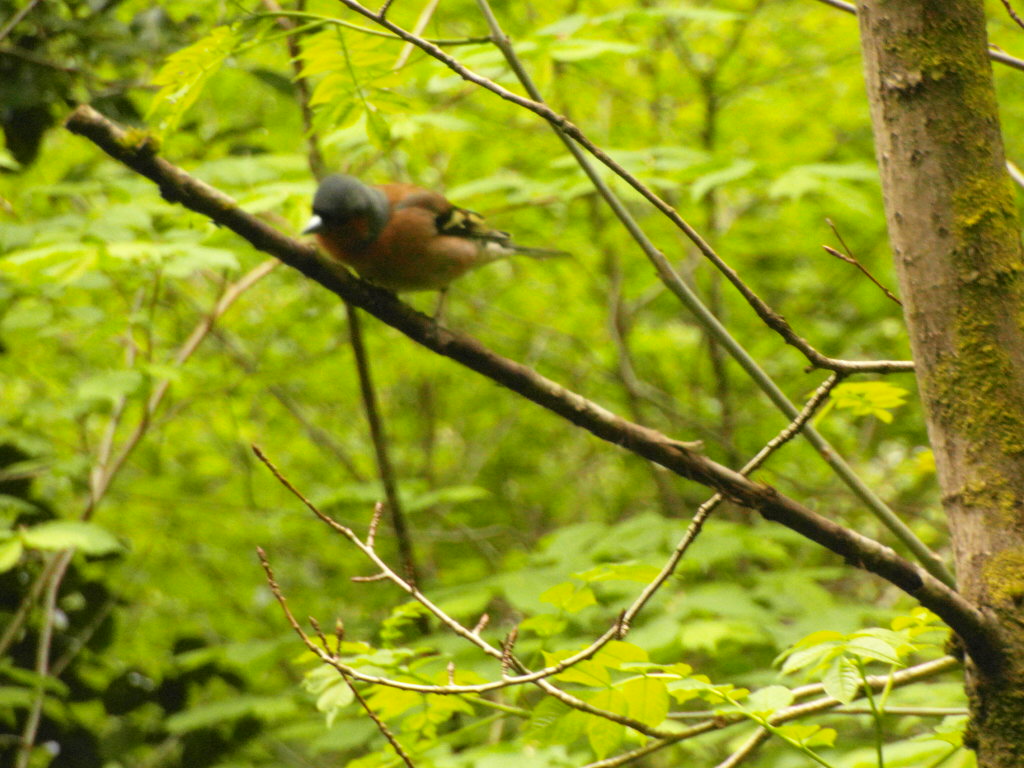 Photograph by Aileen Milne,19th January 2018
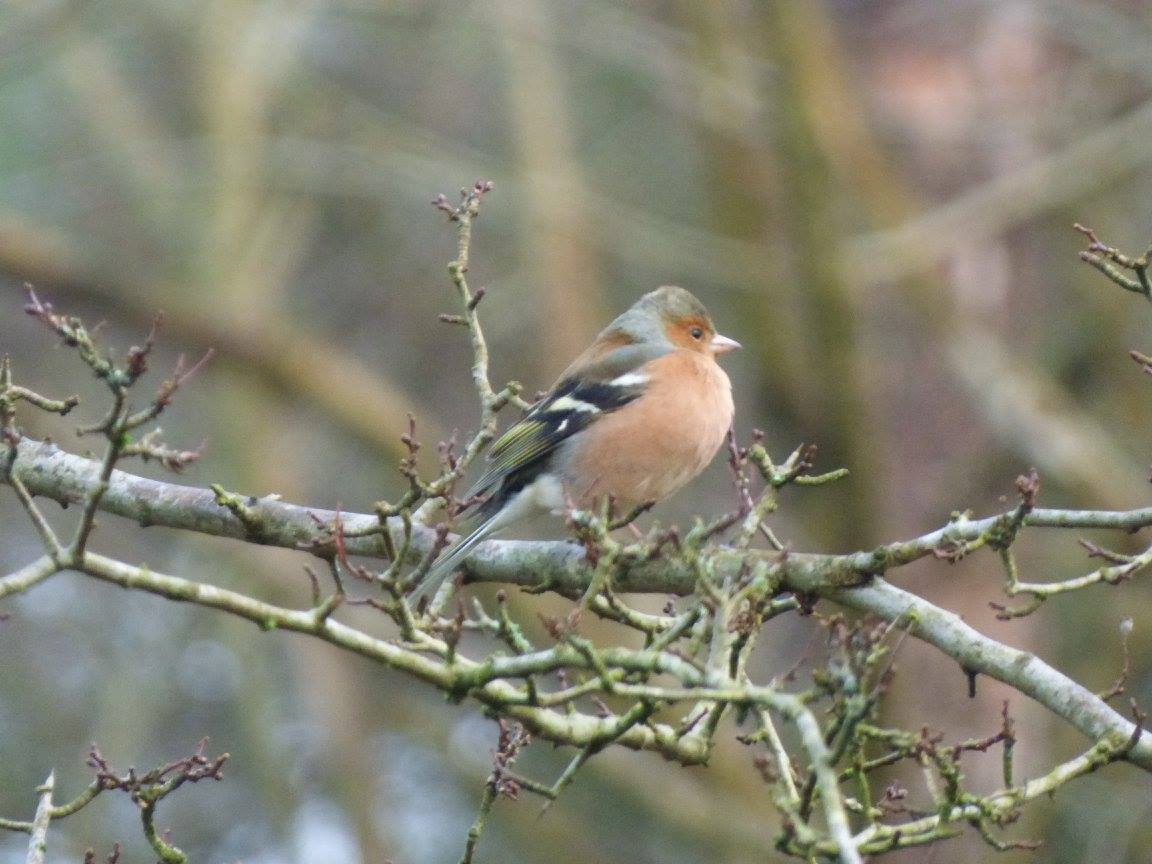
To learn more about Chaffinch's, please visit the RSPB web site at: https://www.rspb.org.uk/birds-and-wildlife/wildlife-guides/bird-a-z/chaffinch/
Click to find out more about the Common Chaffinch on eBird - recorded on June 21st 2025.
Chiffchaff ✓ Summer Visitor
Photographs by Chris Everett 2017


Click to find out more about the Common Chiffchaff on eBird - recorded on June 21st 2025.
Coal Tit ✓ Resident
Thanks to Aileen Milne


Click to find out more about Coal Tits on eBird - recorded on June 27th 2025.
Dunnock ✓ Resident
Photograph by Chris Everett

Click to find out more about Dunnocks on eBird - recorded om June 20th 2025.
Goldcrest ✓ Resident
Photographs by Chris Everett

Click to find out more about Goldcrests on eBird - recorded on July 1st 2025.
Jackdaws ✓ Resident
Photographs by Chris Everett


Click to find out more about Eurasian Jackdaw on eBird - recorded on June 21st 2025.
Aileen Milne - 2nd December 2020


Kestrel - Resident
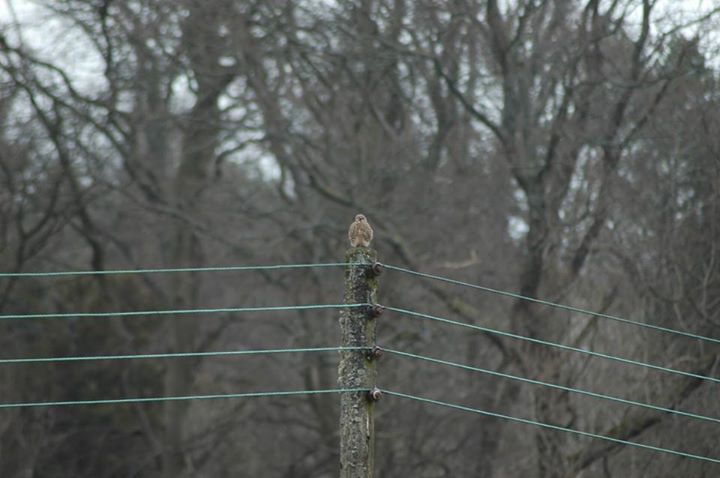
Long Tailed Tit ✓ Resident


Photographs by Chris Everett
Click to find out more about Long Tailed Tits on eBird - recorded on June 22nd 2025.
Mistle Thrush ✓ Resident


Photographs by Chris Everett
Click to find out more about the Mistle Thrush on eBird - recorded on June 20th 2025.
Nuthatch ✓


Photographs by "Michael Sinclair"
The Nuthatch nesting hole is best viewed from the big tree nearby, but if you stand where he was you might see the Nuthatches climbing up the tree.


Photographs by Chris Everett
There is also a video of the Nuthatch on the same tree as a Woodpecker .... see below !
Click to find out more about the Eurasian Nuthatch on eBird - recorded on 29th July 2025
Ravens ✓


Photographs by Aileen Milne 19th January 2018
Click to find out more about the Common Raven on eBird - recorded on 29th July 2025
Redwings - Winter Visitor


Photographs by Chris Everett
Redpoll - Occasional

Photographs by Chris Everett
Robins ✓ Resident


Photographs by Chris Everett


Aileen Milne's Photos Autumn 2017 [2], March 2018 [3].
Click to find out more about the European Robin on eBird - recorded on June 23rd 2025.
Rook ✓ Occasional
Thanks to Aileen Milne, taken on 2nd October 2020


Click to find out more about the Rook on eBird - recorded on June 30th 2025.
Song Thrush ✓ Resident


Click to find out more about the Song Thrush on eBird - recorded on June 20th 2025.
Photographs by Chris Everett
Sparrow ✓ Resident
Even in the garden, camera at the ready, and with at least twenty of them flying around, taking pictures anything but easy !
Photographs taken on 27th July 2025. Note: As the gent who took these lives adjacent to Linn Park, these guys are in and out like a yoyo !


Sparrowhawk ✓ Resident
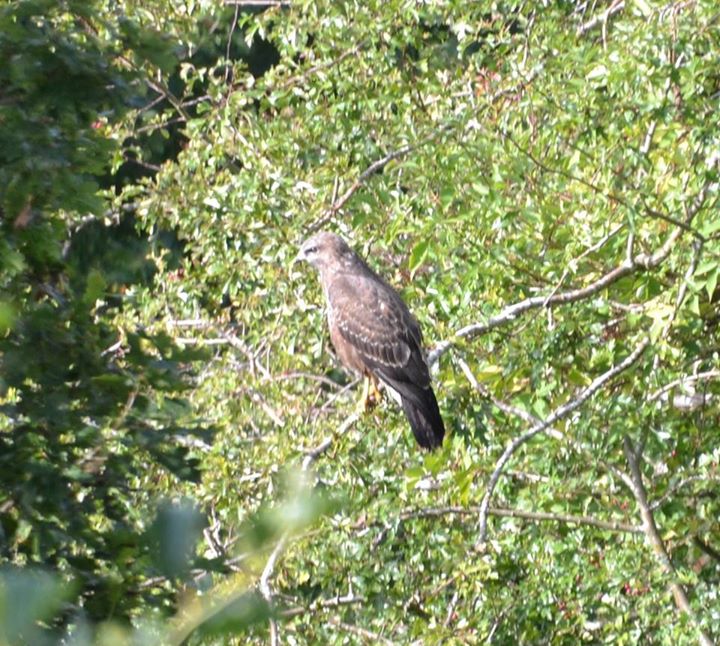
Photograph by David McCann


Photographs by Chris Everett
Click to find out more about the Eurasian Sparrowhawk on eBird - recorded on 10th July 2025.
Noted that there are some eighteen species of this lovely bird according on eBird
Tawny Owl - Resident
Hear them at night .... but to see them during the day ... almost impossible. Thanks to Mhairi McClair for this photograph.
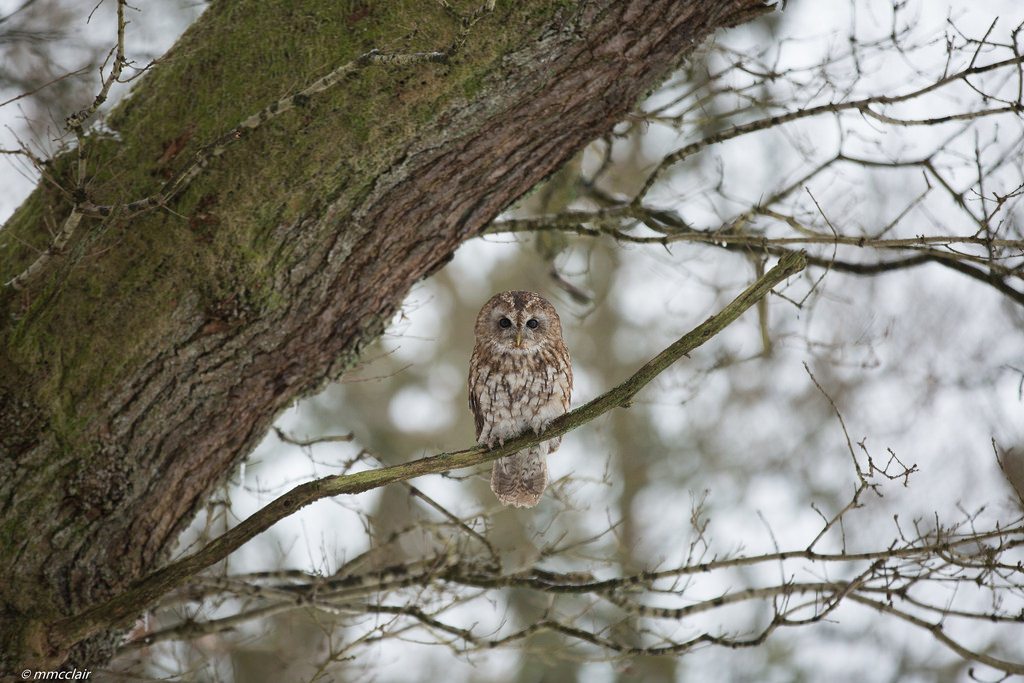
And to Aileen Milne for these ones taken on 19th April 2021.


Thanks to John Bryce Adamson for these photos the Tawny Owl taken on 2nd July 2021


TreeCreeper ✓ Resident
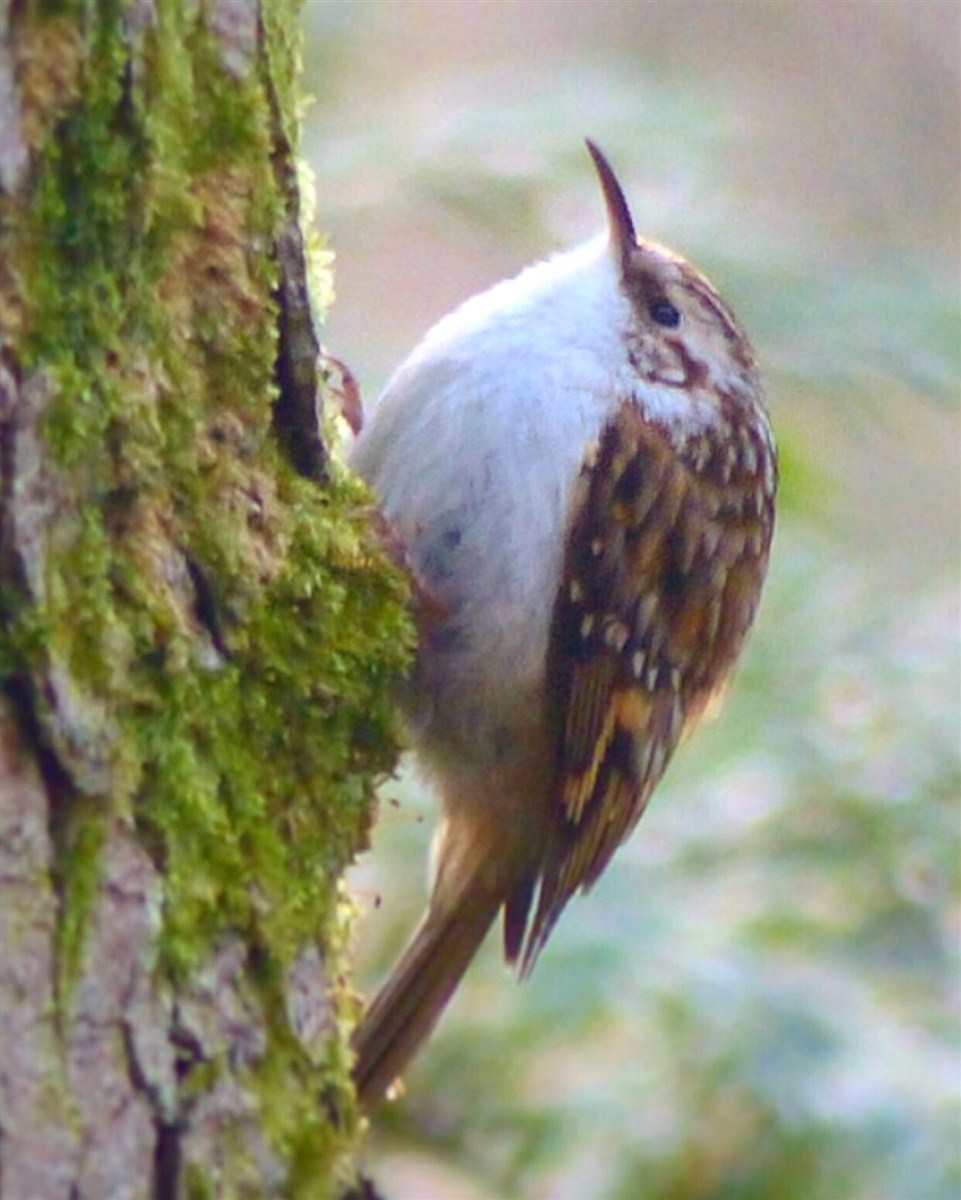 Thanks to Michael Sinclair [aged an awful lot less than the web master] for sending this in. This is what he said about taking the photograph:
Getting the picture was a mix of luck and patience. We were walking around the top wood for about 20 minutes when we saw the tree creeper fly onto one of the large spruce trees. Usually they tend to move quite quickly in a spiral up the tree. The trick is usually to wait for them coming back round again to the side your - but higher up! 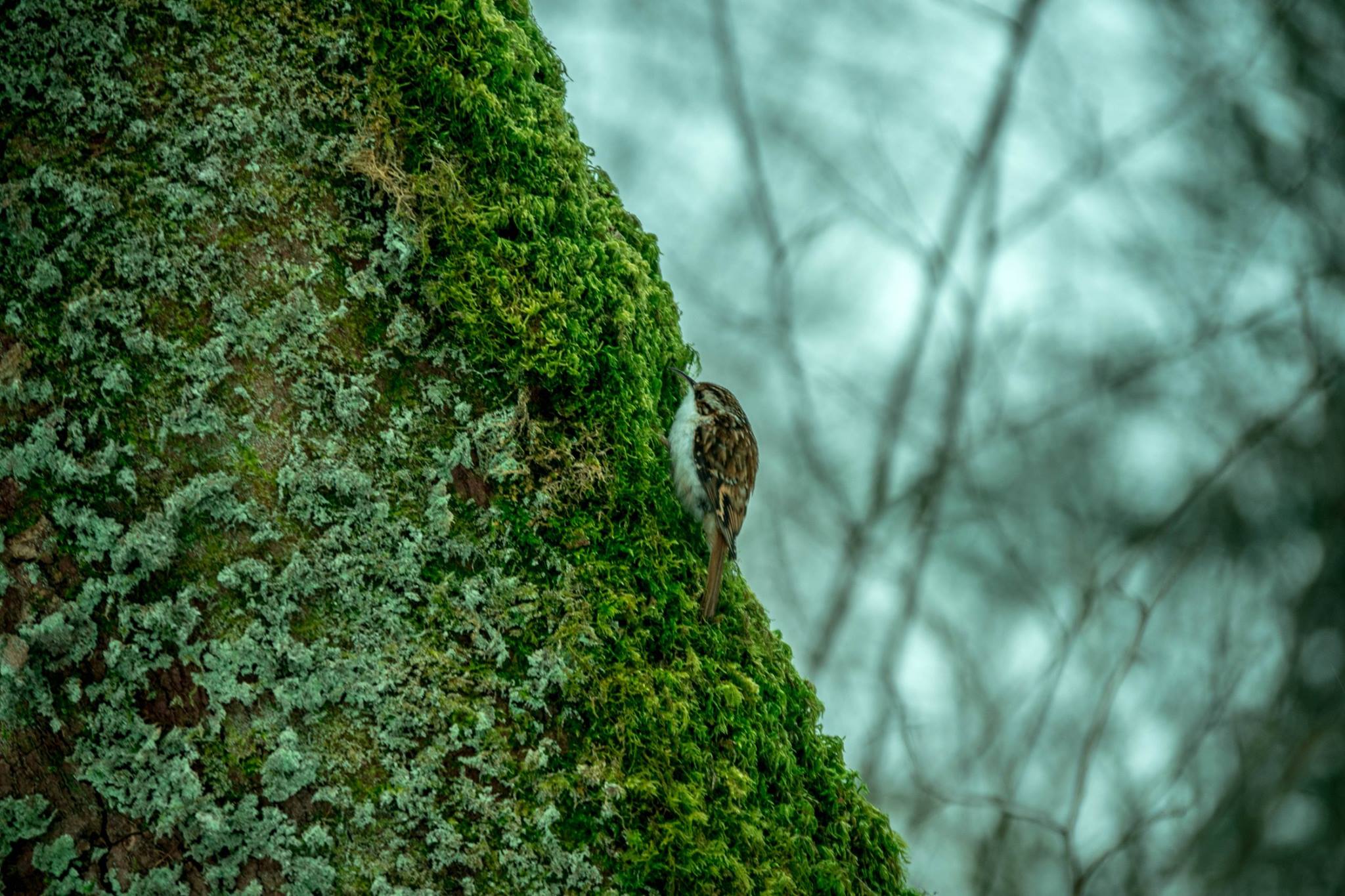 On this occasion though, the bird stayed roughly at the same place on the trunk for a while - this allowed me to creep through the undergrowth and get a good position up the bank at the same height as the bird - I waited about 5 minutes before it moved and I got a good photo of the bird against the green moss.
And another one of a tree creeeper [on the right] which I have labelled as being from "GQ" taken in March 2018.
and the ones below from Aileen MIlne in April 2020.


Click to find out more about the Eurasian Treecreeper on eBird - recorded on July 1st 2025.
Woodpeckers ✓ Resident
Woodpeckers are very noisy but very shy ! Michael found one down by the waterfall ... May 2016
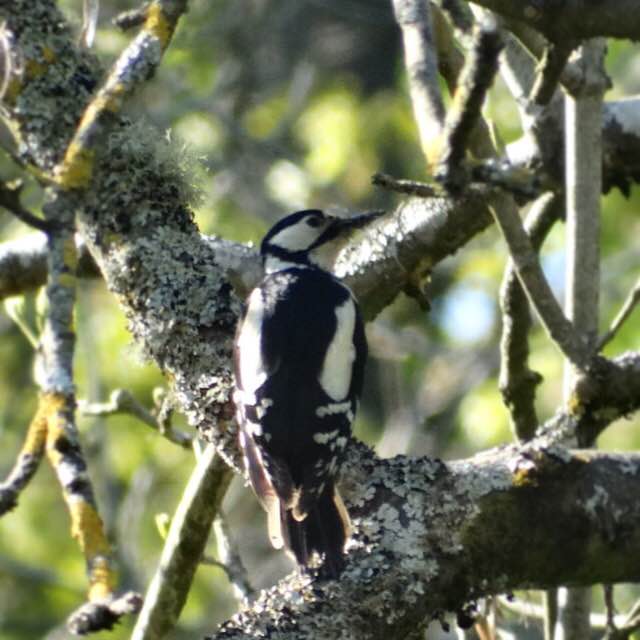
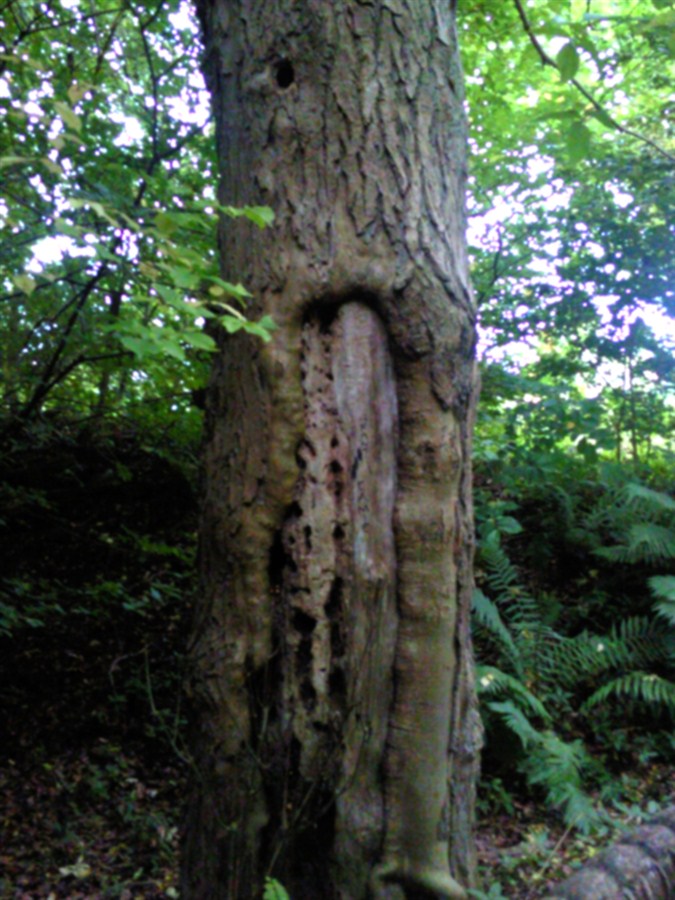
See the holes in the tree which is in the west side [bottom end] of the wood below the stables. [2010] 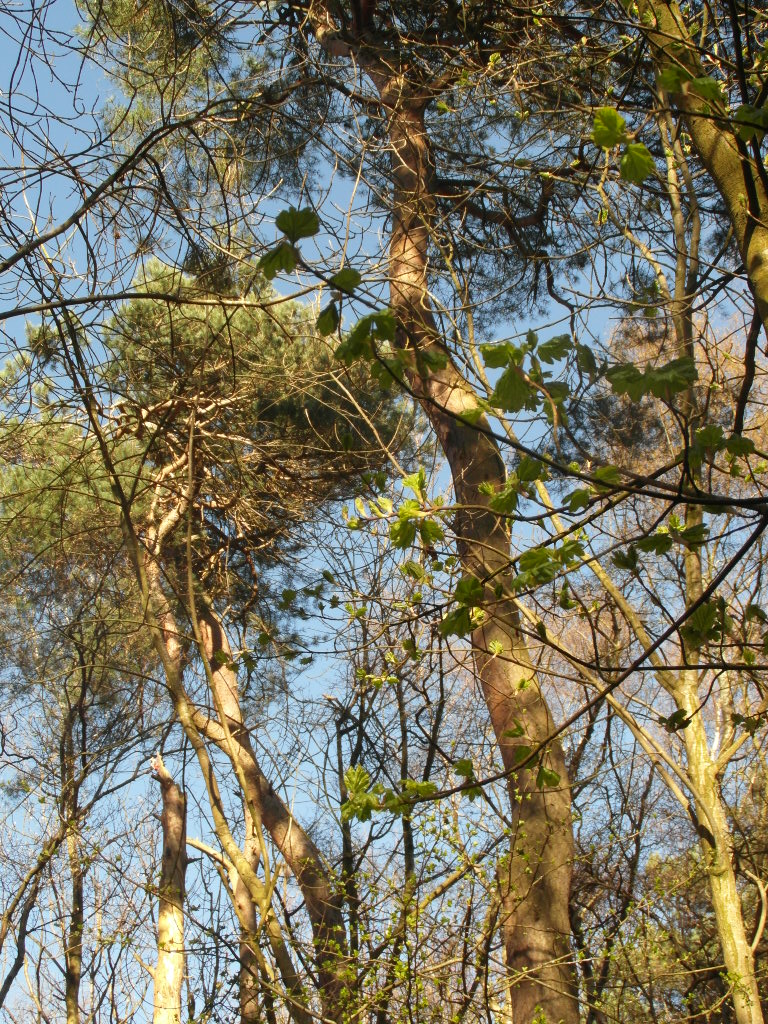
April 20th 2016. W could hear the woodpecker, but eventually found him in a tree. As we got the camera out, he flew to the top of the broken tree to the bottom left of the picture. We THINK we can see a few pixels that we THINK is our bird ...
 Thanks to Aileen Milne - 8th February 2018


Thanks to Chris Everett - August 2019


Thanks to Aileen Milne - 19th April 2020


The the first video is of a nuthatch - but listen for the wood pecker ! The other two are of course of the wood pecker.
Click to find out more about the Great Spotted Woodpecker on eBird - recorded on 21st August 2025
Wood Pigeons ✓ Resident

Photographs by Chris Everett


Thanks to Aileen Milne - 23rd September 2020
Click to find out more about the Common Wood-Pigeon on eBird - recorded on June 20th 2025.
Wren ✓ Resident
Thanks to Aileen Milne - 11th December 2020


Photographs by Chris Everett


Click to find out more about the Eurasian Wren on eBird - recorded on June 21st 2025.
For the list of birds identified with Merlin click here.